
"African highland coffee"
900 article(s) found

The Essex Pavilion of the World Expo tells the Origin of Coffee
A (Reporter Xie Lai) the Ethiopian Ministry of Culture and Tourism announced on the 8th that Ethiopia has launched nationwide preparatory activities to participate in the Shanghai World Expo. It is reported that the Ethiopian exhibition area at the African Joint Pavilion will tell visitors the story of the origin of coffee and showcase the rich natural and cultural heritage of the East African country. According to the website of the Foreign Ministry, Ethiopian culture

Introduction to the difference between water-washed and sun-treated Sidamo Lion King coffee beans
Sidamo Coffee beans are grayish, thick in some places and small in others, with soft and strong acidity, mellow and sweet and spicy. It is one of the courtyard coffees in the highlands of southern Ethiopia. Unlike ordinary African coffee, Sidamo has clear acidity, smooth taste and delicate floral smell. The taste of Sidama in the sun is close to the smell of flowers, but slightly.
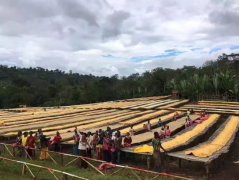
Humbera Sakuran, the boutique coffee producing area of Humbera Coffee, the New pre-season Coffee in 2021
Ethiopian Sidamo Shakisso Natural Sakui 01 | Humbera Hambela village-level treatment plant is located in Guji, Guji District. In recent years, Humbera has grown rapidly in terms of quantity and quality, and has obtained organic certification. The water washing and sun-drying batches of coffee produced have the characteristics of good cleanliness. Humbera treatment Plant is operated by METAD Agricultural Company, and METAD was founded at

Exquisite fragrant Tanzania Kilimanjaro Coffee Flavor and Taste Manor
The types of rainfall can be divided into bimodal distribution and unimodal distribution. The areas with double bee rainfall include the provinces around the Lake Victoria basin, the northeast highlands, the coastal and inland northeastern. The bimodal rainfall area is characterized by two rainy seasons. The short rainy season occurs from September to December. The total rainfall can reach 200-500 mm. The long rainy season occurs from March to May.

Round taste of Tanzania Kilimanjaro coffee flavor taste manor characteristics of boutique coffee
The types of rainfall can be divided into bimodal distribution and unimodal distribution. The areas with double bee rainfall include the provinces around the Lake Victoria basin, the northeast highlands, the coastal and inland northeastern. The bimodal rainfall area is characterized by two rainy seasons. The short rainy season occurs from September to December. The total rainfall can reach 200-500 mm. The long rainy season occurs from March to May.

A brief introduction to the History and Culture of the Origin and Development of Coffee in the aromatic Coffee producing area of Xida Mochizo, Ethiopia
The coffee in Sidamo has a variety of flavors. Different soil types, microclimates and countless native coffee species, towering mountains, highlands, plateaus, valleys and plains, diverse topography, and the geology of the area belongs to nutrient-rich, well-drained volcanic soil. the depth of the soil is nearly two meters, and the surface soil is dark brown or brown. The biggest advantage of the place is

Introduction to the flavor and taste characteristics of Ethiopian Sidamasha Chiso coffee with a long aftertaste
Ethiopia is rectangular, with a ratio of length to width of 3:2. From top to bottom, it is composed of green, yellow and red parallel equal horizontal rectangles, with the national emblem in the middle of the flag. Since the end of the 19th century, Ethiopia began to use the green, yellow and red cross-striped national flag. In modern history, Ethiopia is the first African country to join the forest of free nations. [8] to this century

African coffee-producing countries
1. Kenya Kenya grows high-quality Arabica coffee beans, coffee beans almost absorb the essence of the whole coffee cherry, has a slightly sour, thick aroma, is very popular with Europeans, especially in the United Kingdom, Kenya coffee has surpassed Costa Rica coffee, become one of the most popular coffee. Aromas of wine and flowers, full texture, small and round, due to
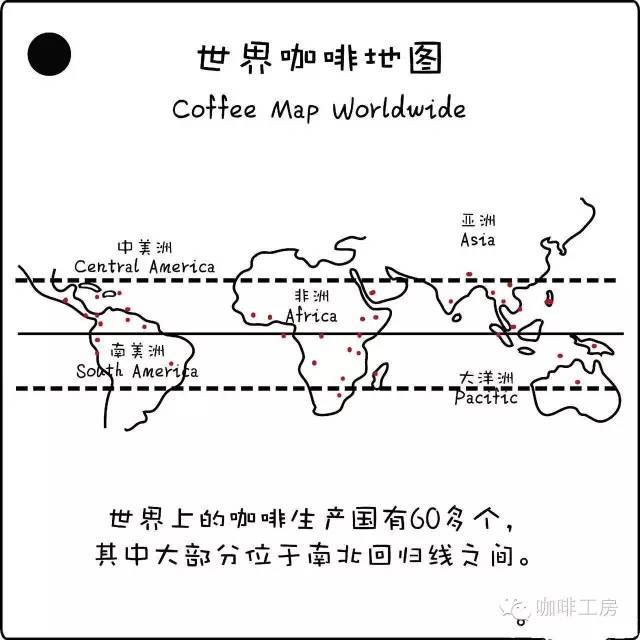
Evaluate the regional characteristics of the two major coffee producing areas: [Africa] and [America].
In the preface, there are some vague definitions of fine coffee, such as variety, treatment and quality identification, but there are also some very clear definitions: only in the most favorable microclimate and soil and water can we grow high-quality coffee with unique flavor. Coffee belt coffee trees are only suitable for growing in the tropics or subtropics, so the zone between latitude 25 degrees south and north is the most suitable for growing coffee. And this...
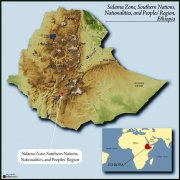
The birthplace of coffee beans, the producing areas and stories of Ethiopian boutique coffee beans.
The Federal Democratic Republic of Ethiopia (The Federal Democratic Republic of Ethiopia), or Ethiopia for short, is a country located in northeast Africa. It is bordered by Djibouti and Somalia to the east, Sudan and South Sudan to the west, Kenya to the south and Eritrea to the north. The plateau accounts for 2% of the country's area, with an average elevation of nearly 3000 meters.

Fine coffee from Rwanda, a small African country, an introduction to the Lutesilo producing area of the western province
Rwanda is a small African country, and the local people are relatively poor, but it produces straight and very good coffee. Unlike its neighbors Kenya and Ethiopia, Rwanda's coffee is mainly round bourbon. The taste is not as prominent as Ethiopia and Kenya, but the evenness is excellent. Karnogi coffee in Rwanda is grown and harvested by local small farmers and is produced by Git

Boutique coffee learn from Ethiopia and snow coffee raw beans
Yejaschefine is the representative of East African boutique coffee (specialty coffee). It has a very special and unusual aroma of citrus fruit and flowers, which makes it one of the most distinctive coffee in the world, which is rare and expensive. Medium to pointed (delicate) acidity and medium body, smooth and well balanced cup with a creamy

Coffee bean flavor of American beans, African beans and Asian beans
[introduction] Coffee is rich and interesting in the world. Coffee from different continents has its own characteristics. Coffee is the product of the equator to 15 degrees north latitude. Therefore, it is produced in South America, Asia and Africa. However, the coffee produced from the equator to 15 degrees north latitude is so strong and bitter that only some people who drink coffee and do not know its taste will like it. Actually, the best coffee should be
Coffee common sense African coffee producing countries
1. Kenya Kenya grows high-quality Arabica coffee beans, which absorb almost the essence of coffee cherries, with a slightly sour, thick aroma, and are very popular among Europeans, especially in the United Kingdom. Kenyan coffee surpassed Costa Rican coffee and became one of the most popular coffee. With aromas of wine and flowers, the texture is full, small and round, because

Introduction of Coffee Flavor and Taste Variety extraction time in Xidamo Chiso producing area of Ethiopia
Ethiopian Sidamo is a type of single origin that grows in Arabica coffee in Ethiopia's Sidamo province. Like coffee in most African countries, Ethiopian Sidamo is characterized by small gray beans, but characterized by its rich, spicy, wine or chocolate-like taste and floral aroma. The most distinctive flavors found in all Sidamo coffee are lemon and citrus, bright.

What's the difference between washed Sidamo and sunlit Sidamo? what are the flavor characteristics of coffee beans?
Professional coffee knowledge exchange more coffee bean information please pay attention to the coffee workshop (Wechat official account cafe_style) Sidamo coffee raw beans slightly gray, some places are thick and some places are small, acidity is soft and strong, mellow is good, sweet and spicy, it is one of the courtyard coffee in the highlands of southern Ethiopia. Unlike ordinary African coffee, it is clear in Sidamo.

How does African coffee get to all parts of the world?
How coffee from Africa was shipped to all parts of the world at the beginning of the 20th century, Brazil accounted for more than 75% of the world's total coffee production, thus winning the reputation of the coffee kingdom. Coffee is one of the important pillars of Brazil's national economy. There are 500000 coffee plantations, large and small, covering an area of about 2.2 million hectares, with a working population of more than 6 million and an annual output of about 2 million tons of coffee.

Flavor characteristics of Ugandan coffee the difference between Ugandan Bugishu AA coffee and Kenyan coffee
For the exchange of professional baristas, please pay attention to the coffee workshop (Wechat official account cafe_style) East African Great Graben (that is, Rift Valley) connecting Weidoria Lake and Elgon Mountain is a famous and important boutique coffee belt in East Africa. The eastern side of Mount Elgon is one of the important coffee producing areas in Kenya, while the western side of Mount Elgon, the western highland on the Ugandan side, also produces great coffee.

The difference between the flavor description of African beans and American coffee beans lies in the introduction of the country and the manor.
The difference between the flavor description of African beans and American coffee beans lies in where the manor is introduced [Yega Schiffe Woka, Ethiopia] (slightly roasted with water)-lemon, kumquat and white grape juice. Waka cooperatives join the famous Yejia Sheffield Coffee Farmers Cooperative Union to produce high-quality washed Ethiopia can reach the highest grade G1 [Ethiopia Yega Sheffield ari
Djimmah producing area Ethiopian boutique coffee beans African flavor coffee
Yega Chefe and Sidamo, which are famous for their bright sour taste, are famous for their charming and mixed fragrance, while the western half of the forest is covered with a large area of primeval forest, mostly in the process of complete natural evolution, creating a more complex variety of coffee. The coffee varieties in the Kafa forest in the southwest are extremely resistant to disease. Due to natural evolution and less manual screening, its overall flavor is slightly lower than that of the eastern half of the wall. The coffee producing areas of Ethiopia are